Top 10 Hard Truths About Partnerships
And why they are still worth it
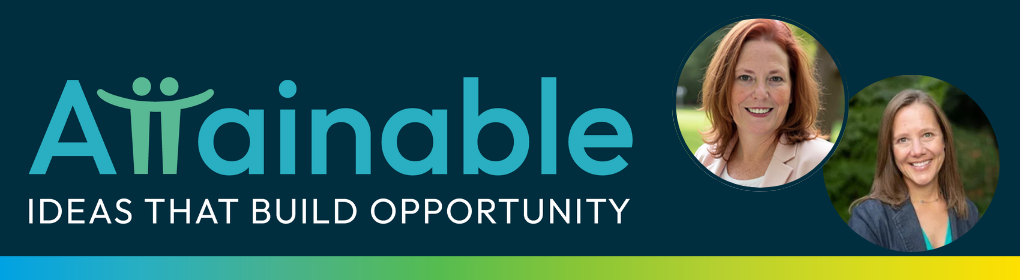
This blog post started as a conversation somewhere between Alamosa and Denver.
My colleague, Libby Klingsmith, and I had spent the day in the San Luis Valley with more than 40 cross-sector partners discussing construction and skilled trades pathways, workforce needs, learner supports, and regional alignment.
It was one of those meetings you leave feeling energized. Partners showed up fully engaged, pushed themselves to think outside the box, and brought genuine innovation to a complex regional challenge. Exactly the kind of collaboration you hope for.
On the long drive home, riding that wave of momentum, we found ourselves reflecting on something we've joked about over the years — and something that feels especially true on days like this. Supporting and facilitating partnerships would be much easier if we were a control-type organization instead of a truly collaborative one.
Even after a great meeting, we know the hard truths about partnerships and collaboration. Collaboration takes time. It can be messy and ambiguous.. True partnership requires patience, vulnerability, and a willingness to let go of ownership and ego in favor of shared vision.
We wish every convening could feel like the one we'd just left — but the reality is that not all of them do. Lately, in a fiscal and political environment where organizations are facing increasing pressure and competition for resources, that tension feels even more real.
But after eight hours of conversation, reflection, and honest frustration with the broader landscape, we landed in the same place we always do...
Partnership is hard. But it's still worth doing.
Because real systems change requires buy-in. And buy-in cannot be forced.
It has to be intentionally built — one conversation, one shared commitment, one trusting relationship at a time. Here are ten hard truths we’ve learned about partnerships — and why, despite all of them, we still believe deeply in the work.
1. Alignment Takes Longer Than You Think
Everyone may agree on the vision, but that does not mean they agree on the path to get there.
Alignment requires revisiting assumptions, navigating tradeoffs, and having the same conversation more than once — often many more times than you expected.
This can feel frustrating, especially for organizations wired for speed and execution.
Why it’s worth it:
When alignment finally clicks, implementation becomes stronger and more sustainable because people see themselves in the work. The result is not compliance — it’s ownership.
2. Partnership Does Not Mean Full Agreement
One of the biggest misconceptions about collaboration is the idea that successful partnerships require everyone to think the same way, communicate the same way, or approach the work from the same perspective.
They do not.
Strong partnerships are not built on uniformity. They are built on the ability to respect different expertise, navigate disagreement, and stay focused on shared outcomes even when priorities or approaches differ.
That can be difficult.
Organizations naturally want ownership. People want their ideas reflected in the work. Institutions carry history, pressure, pride, and sometimes mistrust into collaborative spaces. And when tensions emerge, it can be tempting to retreat into individual priorities instead of collective progress.
But partnership work requires a different posture:
the willingness to keep showing up, even when alignment is imperfect.
3. Collaboration and Competition Often Exist at the Same Time
Right now, many organizations are being asked to collaborate more deeply while simultaneously competing harder for limited resources.
That tension is real.
People may genuinely believe in shared vision while still navigating institutional pressures, funding uncertainty, staffing challenges, and survival instincts.
Why it’s worth it:
The partnerships that survive these moments are the ones built on trust rather than transaction. Those relationships become the foundation for long-term systems alignment — and recognize a simple truth: while organizations may compete in the short term, growing the overall talent pipeline benefits everyone. A stronger workforce ecosystem creates more opportunity, more resilience, and more access to the skilled workers employers need.
4. Communication Breakdowns Are Inevitable
Emails get missed. Assumptions go unchecked. People interpret the same conversation differently or misread intent.
In complex partnership work, miscommunication is not a sign of failure — it is part of the process.
Why it’s worth it:
Strong partnerships build communication muscle over time. They create clearer expectations, better coordination, and stronger relational trust because people learn how to navigate complexity together.
5. Decision-Making Gets Messy
More voices mean more perspectives. More perspectives usually mean slower decisions.
Partnership work requires sitting in ambiguity longer than many organizations are comfortable with.
Why it’s worth it:
Inclusive decision-making leads to stronger implementation because people feel genuine ownership over the outcome. The process may take longer upfront, but it often prevents resistance later.
6. Trust Is Built Slowly — and Can Disappear Quickly
Trust does not come from kickoff meetings, or action plans, or memorandums of understanding.
It comes from consistency. Transparency. Follow-through. Listening. Showing up again and again.
And in collaborative work, trust is fragile.
Why it’s worth it:
Systems change moves at the speed of trust. Once trust exists, partners are more willing to take risks, share challenges honestly, and build solutions together instead of protecting territory.
We saw this play out with a healthcare employer partner about two and a half years into a partnership. They weren't seeing the results they needed on the timeline they needed. It would have been easy to get defensive or write off their frustration. Instead, we listened — and then brought it back to the table. Other partners listened too. And today, everyone is still there, actively working on how to better meet that employer's needs. That's what trust looks like when it's real.
7. Not Every Partner Will Show Up the Same Way
Capacity varies. Engagement fluctuates. Priorities shift.
Some organizations will lead loudly. Others will contribute quietly behind the scenes. Some may step forward only when the work directly intersects with their moment or mission.
That does not necessarily mean they are not invested.
Why it’s worth it:
Healthy partnerships leave room for flexibility and recognize the deep expertise each partner brings to the table. Meeting organizations where they are creates stronger local ownership and more resilient ecosystems over time.
8. Conflict Can Strengthen Partnerships — or Quietly Destroy Them
Disagreement is inevitable when people from different sectors, institutions, and lived experiences come together around complex problems.
Conflict can be healthy, but only when it's managed in productive ways.
We have seen partnerships deepen because difficult conversations surfaced real tensions, clarified priorities, and forced more honest alignment. We have also seen partnerships slowly lose momentum because people could not move past the conflict, could not rebuild trust, or avoided addressing issues altogether.
Sometimes partnerships do not fail because the vision was wrong. They fail because the trust and alignment were not strong enough to sustain the work through times of tension.
Why it’s worth it:
When partnerships learn how to navigate conflict productively — with honesty, humility, and a willingness to stay at the table — the work becomes stronger, more resilient, and more grounded in reality rather than superficial agreement.
9. The Early Stages Can Feel Painfully Slow
This is something outsiders often misunderstand.
You cannot shortcut trust-building. You cannot force relationships to develop faster. And you cannot simply throw resources at collaboration and expect alignment to happen automatically.
The early stages of partnership work are often heavy on listening, relationship-building, and creating shared understanding.
That work can feel invisible.
Why it’s worth it:
That invisible infrastructure is what makes long-term systems transformation possible.
We saw this clearly in the San Luis Valley. More than 40 partners showed up for a regional kickoff meeting not because of a mandate, but because of trust — trust in the people convening the work and trust in each other’s intentions.
In many ways, that level of engagement is a resource all its own.
10. Some Systems Are Not Ready to Change
This may be the hardest truth of all.
Sometimes you encounter a partner, institution, or system that simply is not ready — regardless of how strong the idea is or how urgent the need may be.
You can see the potential clearly. You can know the solution makes sense. And still, the buy-in and/or the feasibility just is not there.
That can mean walking away from good ideas, or at least putting them down for now.
Why it’s worth it:
Partnership work teaches humility. You cannot force transformation onto people or communities. Lasting change only happens when those closest to the work are ready to own it.
Why it’s worth it:
The most effective partnerships are not the ones without tension. They are the ones that learn how to prioritize what matters most, let go of the need for complete agreement, and continue building toward shared impact anyway.
Because systems change does not happen when every organization protects its own lane. It happens when people decide the larger outcome matters more than individual ownership.
THE BOTTOM LINE
Partnerships are not the most efficient path forward, but they are the only path to lasting change.
If the goal is real systems change — especially in education and workforce ecosystems — no single organization can do it alone.
Working in partnership is slower. More vulnerable. More relational. It asks people to sit in ambiguity, build trust before certainty exists, and continue showing up even when progress feels uneven.
And yet, we continue to believe deeply in it because when partnerships work, they unlock something powerful:
local ownership, shared vision, excitement for what's possible, and solutions that are actually designed with communities instead of for them.
The work is hard precisely because the stakes are real.
And on the days it works, it looks like 40 partners in the San Luis Valley choosing to show up for each other and their community.
RECENT ARTICLES