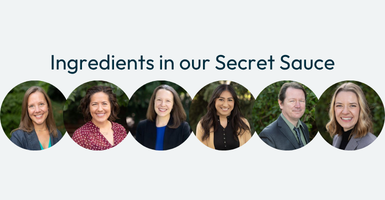
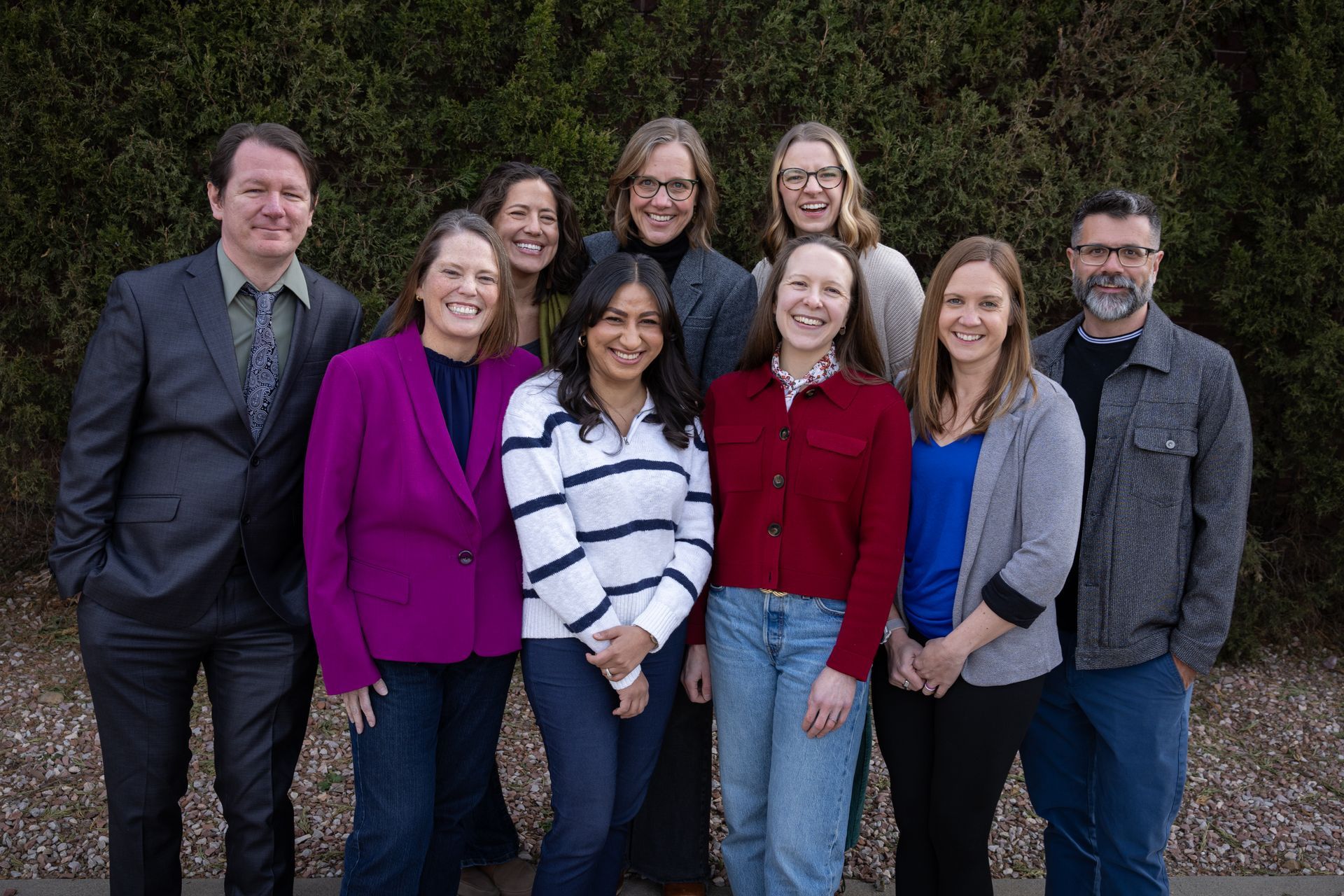
Behind every great partnership, successful initiative and ambitious idea is an incredible team of people who make it happen. As The Attainment Network continues to grow, we're evolving our team to better support our partners, communities and the work ahead. Please join us in congratulating these team members on their new roles — and getting to know a few of the superpowers they bring to the table. Libby Klingsmith, Vice President for Strategic Partnerships Libby leads with kindness and brings a joyful energy to every partnership. As Vice President for Strategic Partnerships, she'll lead our strategic partnership work, strengthening relationships across sectors and regions, cultivating new partnerships and funding opportunities, and helping translate what we learn through regional implementation into broader learning and impact across Colorado. Michelle Camacho Liu, Director of Partnerships and Systems Strategy Where others see complexity, Michelle sees opportunity. As Director of Partnerships and Systems Strategy, she'll provide strategic leadership across some of The Attainment Network's most important initiatives, including the Denver Metro Regional Partnership, while advancing statewide policy and systems alignment and strengthening partnerships across agencies and sectors. Katherine Stewart, Director of Partnerships and Engagement With her special brand of gentle yet firm leadership, Katherine keeps all our ducks in a row. In her role as Director of Partnerships and Engagement, she'll strengthen collaboration across our regional partnerships through operational leadership while guiding strategic initiatives, consulting services, new business development and grants management. If there are a dozen moving pieces, chances are Katherine already has them organized. Ashley Maestas, Director of Rural Partnerships Ashley has a gift for energizing people around a shared vision. As Director of Rural Partnerships, she'll continue leading the San Luis Valley regional partnership and its healthcare and construction pathway initiatives while helping other rural communities build the partnerships and systems needed to expand opportunity for learners and earners while meeting critical workforce needs. Wes DeVaul, Coordinator of Operations and Rural Partnerships Wes reminds us to laugh while he rolls up his sleeves and makes things happen. As Coordinator of Operations and Rural Partnerships, he'll help expand the San Luis Valley's successful healthcare pathways model into construction and other high-demand industries while supporting the partnerships that make this work possible. Emily Chatburn, Coordinator of Operations and Professional Learning Emily is our behind-the-scenes mastermind, turning ambitious plans into seamless execution. As Coordinator of Operations and Professional Learning, she'll lead our professional learning and events strategy, provide project management for key strategic initiatives and strengthen the day-to-day operations that keep our work moving forward.

While we’re busily planning the Career-Connected L/Earning Conference with our partners, we’re also looking at a busy month ahead of connecting, listening and collaborating across Colorado. From strengthening career advising and navigation to advancing regional workforce strategies, improving the use of education and workforce data, and helping shape Colorado’s evolving postsecondary talent development system, The Attainment Network team will be in conversations across the state this month. Here’s a look at where we’ll be: 🔹 Sept. 1-2 | Construction Collaboration Event | Alamosa Ashley Maestas and Wes DeVaul will connect with regional partners as the Colorado Attorney General’s Office visits the San Luis Valley to learn more about the work underway across Southeast Colorado. 🔹 Sept. 2 | Economic Summit | Monte Vista Wes will join regional leaders for conversations focused on economic opportunity and the future of the San Luis Valley. 🔹 Sept. 10 | Homegrown Talent Coalition Steering Committee Michelle Camacho Liu and Stefan Richarz will join partners working to strengthen Colorado’s homegrown talent pipelines. 🔹 Sept. 11 and Sept. 24 | Postsecondary Talent Development System Transition Advisory Committee | Denver Michelle and her fellow TAC committee members will continue working on recommendations for Colorado’s reenvisioned unified postsecondary talent development system. 🔹 Sept. 16 | Welcome for Dr. Keith Richard, CCCS | Denver Rana Tarkenton will join education and workforce leaders in welcoming Dr. Keith Richard to Colorado as he steps into his new role as the Vice Chancellor for Workforce Solutions and Innovation at CCCS. 🔹 Sept. 16 | Rocky Mountain Partnership Community Leadership Council Rana will join leaders from education, business, government and community organizations working toward a shared regional goal of putting 71,000 more young people on track for economic mobility by 2030. 🔹 Sept. 17 | Better Data for Better Decisions Coalition Stefan will lead the coalition’s bi-monthly meeting as education and workforce partners continue working toward a more relevant, accurate and user-centered longitudinal data system for Colorado. 🔹 Sept. 18–19 | SLV Collaboration Summit | Monte Vista Ashley and Wes will join leaders and community partners from across the San Luis Valley to strengthen connections, celebrate progress, and align around shared priorities that create greater opportunity for learners, earners, employers, and communities. 🔹 Sept. 24 | At the Center: Education in the Pikes Peak Region | Colorado Springs Emily Chatburn will join Peak Education and community partners to explore the challenges and opportunities facing local students and the future of education in the Pikes Peak region. We’re looking forward to the conversations ahead this month. Be sure to reach out to us if you’ll be at any of these events. We’d love to connect.
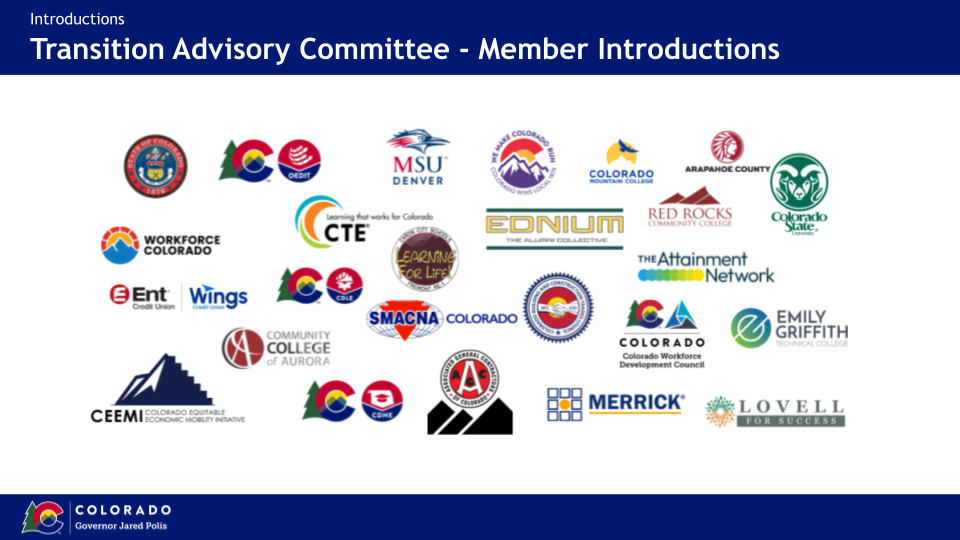
Earlier this summer, I was honored to be appointed vice-chair of the Transition Advisory Committee (TAC), established by House Bill 26-1317 . The TAC’s work stems from a 2025 executive order and a subsequent report recommending ways to reimagine Colorado’s higher education and workforce systems to address our state’s talent gap. Our goal is to help create a more connected, outcomes-oriented system that leads to good jobs for Coloradans while meeting the talent needs of businesses. By November 30, the TAC must develop a transition plan with recommendations for a restructured state agency that streamlines higher education and workforce development efforts. I’m grateful to work alongside 26 other members representing state agencies, institutions of higher education, apprenticeship programs, organized labor, local workforce centers, nonprofit associations, and the business community. This breadth of perspective and expertise is essential to the work ahead. While we will address important tactical components, we recognize that large-scale systems change takes time. I want our plan and recommendations to provide a strong, supportive foundation that policymakers, educators, workforce development professionals, employers, and opportunity seekers can carry forward beyond 2026 as we continue building an outcomes-oriented system. The Governor’s Office and TAC members are also conducting extensive stakeholder engagement, and I hope you’ll be part of the conversation. You can: Complete the Postsecondary Talent System Feedback Survey Share how you’d like to stay engaged with the work of R eimagining Colorado's Postsecondary Talent Development System initiative Visit the TAC webpage for information on past and upcoming TAC meetings, sign up to provide public comment, and see a full list of all TAC members. You’re also welcome to reach out to me at michelle@attainmentnetwork.org , and I can connect you with available members and resources.
The Career-Connected L/Earning Conference features more than 60 interactive sessions designed to help education, workforce, industry and community leaders strengthen career-connected pathways across Colorado and beyond. From innovative partnership models and emerging policy to practical tools you can put to work immediately, each session offers real-world strategies, lessons learned and opportunities to connect with peers tackling similar challenges. Here's a preview of some of the newest sessions added to the agenda: From Evidence to Impact: What It Takes to Scale Programs Well Learn what separates promising programs from those that achieve lasting impact at scale and explore practical strategies for expanding what works. Featuring: Nathaniel Riggs , Professor, Human Development & Family Studies and Executive Director of the Prevention Research Center, Colorado State University; Tiffany Madrid , Organizational Performance Management Supervisor, CDHS Postsecondary Employment Outcomes: Critical Data for L/Earners and Those Invested in Their Success Discover how national employment and earnings data can help educators, workforce leaders and learners make more informed decisions about education, training and career pathways. Featuring: Gina Johnson , Director, and Christopher Peña , Data Literacy Partner & Intern Supervisor, Postsecondary Employment Outcomes Coalition ; Benazir Rowe ; Junior Developer/Analyst, Front Range Community College When Credentials Cause Harm: Unpacking the Risks of Verifiable Learning and Work Records As digital credentials and verifiable learning records become more common, what unintended consequences should we be preparing for? Explore the opportunities, risks, and ethical considerations surrounding the future of learner records. Featuring: Dr. Kelly Page , LWYL Studios From Data to Action: Building Community-Driven Career Pathways See how communities are using shared data to identify workforce needs, strengthen partnerships and design career pathways that reflect local priorities. Featuring: Kelly Mitchell , Founder/ Principal, and Chris Mitchell, Data and Operations Consultant, Inclusive Design Group What It Takes to Scale: Turning Cross-Sector Partnerships into Workforce Pathways Learn how communities are building and sustaining workforce pathways through strong cross-sector collaboration and shared leadership. Featuring: Stacey Putka , Executive Director, Breakthrough ; Shalyn Kettering , Legal Counsel to the Colorado Attorney General; Clay McCombe , Program Manager, Power Ahead Colorado (a program of DRCOG) Outreach to Employment, By Design: How Commerce City and the Community College of Aurora Aligned Public Dollars Behind One Workforce System Discover how local leaders aligned funding, partnerships and workforce services to create a more coordinated system connecting residents to employment. Featuring: Emily Sanders , Senior Director of Collaborative Action, Rocky Mountain Partnership Cradle to Career ; Clair Collins , Vice President of Enrollment Success and Completion, Community College of Aurora; Sarah Mondesire, Community Well-Being Manager, City of Commerce City Grow Your Own: Navigating the Teacher Degree Apprenticeship Journey Hear firsthand from the partners and apprentices helping build Colorado's Teacher Degree Apprenticeship pathway and learn what's required to launch and sustain this innovative model. Featuring: MK Sagaria-Barritt CareerWise Colorado; Liz Qualman , Associate Dean of Education, Colorado Mountain College; Christina Randle: Educator Pathway Instructor, Harrison School District 2 Leveraging CTE Centers to Build CE Credential Pathways Explore how Career and Technical Education centers are expanding access to college credentials while creating stronger pathways into high-demand careers. Featuring: Shari Culver , Associate Dean, Arapahoe Community College; Dana Levesque , Coordinator of Postsecondary, Littleton Public Schools; Tara Bell , Director of Work-based Learning, Cherry Creek School District From Coursework to Workforce: Reimagining Teacher Preparation Through Career-Connected Learning See how industry experiences are helping prepare future educators to bring career-connected learning and workforce relevance into their classrooms. Featuring: Courtney Anderson , Education Department Chair, Community College of Aurora; Michelle Pacheco , Interim Vice President of Academic Success Community College of Aurora From Paycheck to Pathway: A Hands-On Workshop for Mapping On-the-Job Skills to Academic Credit Learn practical strategies for translating workplace learning into academic credit and creating more seamless pathways between employment and education. Featuring: Kim Eckert, Head of Instructional Innovation & Apprenticeship Design, Craft Education The Continuity Challenge: Tracing Durable Skills from PreK to Onboarding Explore how durable skills develop from early learning through workforce entry and identify practical strategies to strengthen career readiness across every stage of the learner journey. Featuring: Tim Taylor , Co-Founder and President, America Succeeds
It may be the dog days of summer, but our team is energized by the work ahead — bringing partners together, strengthening career-connected pathways, and helping shape systems that create more opportunity for learners and earners. From the San Luis Valley to Aurora to statewide leadership conversations, we're excited to keep collaborating with partners who are building Colorado's future. Here’s where you can find us this August: 🗓️ August 10-11 🔹 Team Time – Denver Our work begins with a strong, high-functioning team. We're excited to come together to invest in the relationships, trust, and shared understanding that will help us collaborate and better serve our partners across Colorado. 🗓️ August 12 🔹 Postsecondary Talent Development System Transition Advisory Committee – Denver Michelle Camacho Liu reconvenes with the Transition Advisory Committee to continue developing recommendations that will guide Colorado's new unified postsecondary talent development system. 🗓️ August 13 🔹 Homegrown Talent Coalition Steering Committee Retreat – Denver Michelle and Stefan will join coalition leaders to align priorities and plan for the year ahead. 🗓️ August 13-14 🔹 Colorado Project 2.0: San Luis Valley Regional Visit – San Luis Valley Part of the Colorado Project 2.0: Rural Renaissance initiative, this regional visit will bring together leaders and community partners to explore how rural innovation, collaboration, and impact-driven action are shaping Colorado's future. Rana will participate in conversations focused on policy, leadership, and regional solutions, while Ashley shares the story and impact of the San Luis Valley partnership. 🗓️ August 21 🔹 Aurora Public Schools Health Science High School Pathways Professional Learning – Aurora Libby and other team members from The Attainment Network are partnering with Aurora Public Schools to build capacity among faculty and staff to support learners as they explore postsecondary pathways to in-demand healthcare careers. PD participants will engage with pathway experiences, connect with employer and postsecondary partners, and build career conversation skills to prepare learners for success beyond high school. 🗓️ August 31 🔹 Career Advising and Navigation Partner Convening – Virtual Katherine, Michelle and other team members will come together with statewide partners to continue advancing our Career Advising and Navigation initiative and align on next steps for this growing body of work.
I recently spoke with a nonprofit leader navigating a difficult transition. For years, their organization had been recognized for its positive impact in the community. But when the longtime CEO departed, things began to get shaky. The reason? Much of the organization's influence, trust, and partnerships were tied to the CEO rather than embedded throughout the institution. The conversation stayed with me because I've spent my entire career in relationship-centered work. I believe deeply in the power of trust, partnership, and human connection. Some of the most meaningful progress I've seen in education and workforce development has happened because people chose to collaborate across organizations, sectors, and perspectives. Relationships matter. But relationships are not a strategy. And they are definitely not infrastructure. Healthy organizations need more than a CEO with strong relationships; they need connective tissue up and down the org chart. As I reflected on that conversation, I found myself asking a different question: If I stepped away tomorrow, would the work continue to thrive? I believe the answer is increasingly yes. Not because I'm unimportant, but because one of my most important responsibilities as a leader is to build an organization that is stronger than any one person's leadership, including my own. Leadership alone isn't enough. It takes people, systems, and shared ownership to turn relationships into lasting organizational strength. I say the same about The Attainment Network's role as a leader in the communities we serve. Our goal isn't to become indispensable. It's to help communities build the capacity, partnerships, and local infrastructure that allow the work to continue and grow long after our role has evolved. That same philosophy shapes how I think about leadership within our own organization. I’ve become increasingly intentional about stepping out of the middle. The more I’ve stepped out of the middle, the more I’ve watched our organization grow stronger. That has meant inviting team members into relationships and opportunities that I once managed myself and creating opportunities for them to lead. Today, the team leads the work, and I don’t need to be in the room all of the time. Our partnership leads have become trusted conveners in the communities they serve. Team members lead relationships with local and state partners — school districts, higher ed, state agencies, and others. They have become recognized experts in areas like data and evaluation, policy, apprenticeships, and emerging industries. Increasingly, our partners know exactly who to call, and it often isn’t me. None of that happened by accident. It happened because we made a conscious decision to forge relationships that belong to the organization, not to the CEO. One experience reinforced that lesson for me in a very personal way. Last year, I asked our policy lead, Michelle Camacho Liu, to represent The Attainment Network in the state's work to align the Colorado Department of Higher Education and the Colorado Department of Labor and Employment. She became our primary voice in those conversations, and she was invited to serve on the Governor's Transition Advisory Committee for that work. I was excited for her. At the same time, I had a fleeting moment of wondering what it meant that I wasn't invited. But then I caught myself and realized that the invitation wasn't evidence that I had become less valuable. It was evidence that our approach was working. She was invited to serve on the committee because she had become a trusted leader. Over months of thoughtful engagement, she built relationships, contributed meaningful expertise, and earned the confidence of the people at the table. As a CEO, I couldn't have asked for a better outcome. Of course, relationships are only part of the equation. Sustainable organizations also invest in the less visible work that creates resilience. We’ve strengthened our partnership model, refined governance and decision-making processes, invested in systems that support collaboration, knowledge sharing, and project management. None of those things make headlines, but together they create an organization that is more durable, more consistent, and less dependent on any one person. I've also learned that building distributed leadership requires letting go of the instinct to be at the center of everything. That's not always easy. Leaders often become leaders because they enjoy solving problems, building relationships, and creating momentum. Stepping back can feel uncomfortable at first. But I've discovered something surprising: there is tremendous satisfaction in watching your team become the people others call first. Their success isn't separate from yours. It is your success. I was reminded of this recently during a cross-sector convening in the San Luis Valley to begin building pathways to in-demand, high-paying careers in construction . We had prepared an agenda and talking points, expecting to facilitate much of the discussion. Instead, local employers, educators, workforce leaders, and community partners quickly took ownership. The conversation became theirs. Ideas emerged, commitments were made, and the momentum belonged to the people in the room rather than to us. As I looked around, I realized that was exactly the point. The strongest organizations and the strongest partnerships don't depend on one person to keep the work moving. They create the conditions for others to lead. Relationships will always matter. They are how trust begins. But lasting impact happens when that trust becomes shared leadership, strong systems, and local ownership. To me, that's what sustainable leadership looks like. It's not about making yourself indispensable. It's about building something that continues to grow because the relationships, the knowledge, and the leadership belong to the organization and the communities it serves.
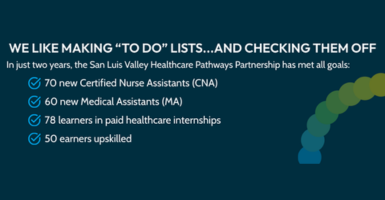
Partners are applying the same employer-driven approach to other high-demand careers
Dive into Colorado’s Efforts to Build a More Connected Education-to-Career Ecosystem

As our nation celebrates 250 years, we're inspired to keep building toward a future where opportunity is within reach for every learner and earner. Throughout July, The Attainment Network team will join partners across Colorado and the country to strengthen career-connected learning, expand economic mobility, and build systems that help every learner and earner thrive. Here’s where you can find us this July: 🗓️ July 1 🔹 Colorado Space Institute Space Educator Bootcamp Celebration – Castle Rock Emily will join education, industry, and workforce partners to celebrate the Colorado Space Institute’s Space Educator Bootcamp and explore how educators are bringing space science and STEM learning into classrooms across Colorado. 🗓️ July 10 🔹 Regional Accountable Entity 1 San Luis Valley Programs Improvement Advisory Council Meeting – Alamosa Wes will join healthcare providers, community organizations, and regional leaders working together to strengthen healthcare programs and address the social determinants of health across the San Luis Valley. 🗓️ July 13-15 🔹 CU Badge Summit – Boulder Stefan will attend this national convening focused on the future of digital credentials and how they can expand learning and career opportunities. 🗓️ July 14-16 🔹 College Board District Success Network Conference – Denver Rana will serve on a panel exploring how schools can help students connect classroom learning to future college and career opportunities. 🗓️ July 16 🔹 Postsecondary Talent Development System Transition Advisory Committee – Denver The Transition Advisory Committee, including our own Michelle Camacho Liu, reconvenes to continue developing recommendations to guide Colorado's new unified postsecondary talent development system. 🗓️ July 20-21 🔹 ECMC Research Gathering: From Questions to Change – Minneapolis Stefan will join ECMC Foundation partners from across the country to explore how research, policy, and practice can work together to drive meaningful systems change. 🗓️ July 23 🔹 Construction Pathway Meeting – Alamosa Ashley and Wes will reconvene with education, workforce, and industry partners in the San Luis Valley to continue building a shared strategy for strengthening construction career pathways across the San Luis Valley. 🗓️ July 30 🔹 Colorado Society of Certified Public Accountants Summer of Fun – Colorado Springs Michelle Payne will connect with accounting professionals, educators, and employers to explore trends in the profession and opportunities to expand mentorship and internship pathways. If you’ll be at one of these events or working on something similar, please reach out. We’d love to hear from you.
Great apprenticeship programs don't stand still. They evolve.
By Reanna Werner, Co-Founder & Chief Problem Solver, Savvion HQ When we talk about Colorado’s workforce challenges, the conversation often starts with hiring. Employers need more applicants. They need stronger applicants. They need people who show up, communicate, solve problems, stay through the hard parts, and grow into leadership. From my vantage point as co-founder of Savvion HQ, I spend much of my work alongside small business owners who are trying to grow responsibly while navigating real-time challenges in hiring, payroll, HR, compliance, leadership, and retention. I am also helping shape the Careers in Hospitality initiative in partnership with the Pikes Peak Workforce Center and Visit Colorado Springs, which has given me an even closer look at how these workforce pressures are playing out across one of our region’s most people-centered industries. What I see is this: hiring is not the whole story. Hiring is the symptom. The deeper issue is that our education, workforce, and employer systems are still too often operating in separate lanes, while employers are trying to navigate one very real, very connected road. That disconnect is especially visible in hospitality and tourism. Hospitality is one of the most people-centered industries in our region. It is also one of the most misunderstood. Too often, students and families see hospitality as a temporary job, not a career pathway. But those of us working closely with employers know the industry is full of opportunities in operations, management, sales, events, culinary, finance, maintenance, marketing, guest experience, and entrepreneurship. The challenge is that the pathway is not always visible. Through Careers in Hospitality, we are working to build a clearer education-to-workforce pathway for one of the Pikes Peak region’s most people-centered industries. This work is being modeled in part after Careers in Construction, a highly successful local program that has already shown what is possible when industry, education, and workforce partners come together around a shared talent pipeline. Their support and guidance have been invaluable as we think through how to adapt a proven framework to the hospitality and tourism sector. We recently had the opportunity to work with MBA graduates from UCCS who used our program as their capstone project. They surveyed hospitality and tourism executives and general managers across the Pikes Peak region to better understand workforce challenges, skill gaps, and employer interest in education-to-workforce partnerships. The report included 39 valid responses from hotels, attractions, event venues, food and beverage businesses, cultural and historic centers, sports and community organizations, transportation services, and other tourism-adjacent organizations. The results were not shocking, but they were clarifying. Employers identified wage competition as their top workforce challenge at 56%, followed closely by hiring qualified candidates at 51% and leadership pipeline concerns at 49%. Retention, attendance and reliability, and scheduling availability each came in at 38%. That tells us something important. Employers are not facing one isolated hiring problem. They are dealing with a layered workforce challenge that includes compensation pressure, readiness gaps, reliability concerns, and a shortage of emerging leaders. The skill gaps were even more telling. Employers reported that today’s applicant pool is lacking communication skills at 74%, time management and prioritization at 72%, customer service at 69%, and customer service techniques at 67%. On the behavior side, the top gaps were resilience at 74%, work ethic and reliability at 72%, service mindset at 72%, and resourcefulness and problem-solving at 72%. These skills are often referred to as soft skills, but that term no longer fully captures their value. Across education and workforce conversations, many organizations are now describing them as durable skills or power skills because they travel across roles, industries, and career stages. I prefer durable skills because that is exactly what they are: skills that hold their value even as technology, job duties, and industries change. In hospitality, communication is not soft. It is the difference between a frustrated guest and a loyal customer. Reliability is not soft. It determines whether a team can function during peak season. Problem-solving is not soft. It is what allows an employee to handle the moment when the reservation is wrong, the room is not ready, the event timeline shifts, or the customer is upset. And this is where AI becomes part of the workforce conversation, not a separate conversation. AI is already changing how employers think about entry-level work. Tasks that are repetitive, administrative, or easily standardized will continue to be supported or reshaped by technology. That does not mean entry-level workers become less important. It means the expectations for entry-level workers are changing. The young person entering the workforce now will need to be comfortable with technology, but technology alone will not make them successful. They will need to know how to ask better questions, interpret information, communicate clearly, adapt in real time, and use good judgment. In a service-based industry like hospitality, they will also need to do the human work that AI cannot replace: reading the room, calming a tense interaction, building trust, showing empathy, and creating an experience that feels personal. That is why durable skills are not secondary to technical training. They are the foundation that makes technical training useful. For employers, AI may eventually help with scheduling, guest communication, training, marketing, revenue management, and back-office functions. But if the workforce pipeline is already struggling with communication, resilience, reliability, and problem-solving, then technology will not solve the core issue by itself. In some ways, it raises the bar. Employees will need both digital confidence and human readiness. That gives education-to-workforce programs a clear assignment. We cannot prepare students only for the tasks that exist today. We have to prepare them for workplaces where technology is changing the task list, but human judgment still determines the outcome. The survey also showed where the pressure is greatest. The hardest roles to fill were maintenance and facilities at 51%, managers and assistant managers at 41%, front desk and guest services at 38%, housekeeping at 38%, and culinary roles at 33%. That matters because some of the most difficult roles to fill are also some of the most important for career exposure. Front desk employees often become the central nervous system of a hotel. Maintenance roles can lead to stable, skilled, well-paying careers. Housekeeping is essential to guest experience and brand reputation. Supervisors and assistant managers become the bridge between entry-level talent and long-term leadership. If students never see those roles as meaningful career pathways, we lose them before they ever enter the pipeline. At the same time, employers are being honest about their capacity. When asked how much time their organization could commit to a workforce development program, 51% said occasional participation, meaning one to two times per year. Another 31% said they could commit to quarterly engagement, while only 15% said they could support ongoing advisory, hosting, or mentoring. That is not a lack of interest. It is a reality check. Employers want to help, but many are running lean. Their biggest limitations were time constraints at 92%, staffing levels at 56%, and cost at 38%. For small and mid-sized businesses especially, goodwill is not the barrier. Capacity is. That means our workforce solutions have to be designed differently. If we want employers to participate, we need to meet them where they are. We need to reduce friction. We need to create clear, practical ways for businesses to contribute without asking them to take on another full-time project. We need to build models that respect employer capacity while still giving students meaningful exposure. One promising approach is project-based learning. Instead of asking an employer to build an entire program from scratch, the employer identifies a real business challenge. Students work on that challenge with guidance. The employer receives useful ideas, fresh perspective, and a tangible result. Students gain exposure to the industry, build durable skills, and begin to understand how classroom learning connects to actual work. That is the kind of partnership employers appear ready for. In the survey, 82% identified better job readiness as a priority outcome, 79% said a stronger applicant pool would matter most, 56% pointed to faster hiring, and 56% pointed to leadership pipeline development. The opportunity is there. The design has to be right. That is one reason the example set by Careers in Construction matters so much. They have helped demonstrate that career pathways become more real for students when employers are organized, educators are supported, and the program structure is clear. Careers in Hospitality is being developed with that same spirit: practical, employer-informed, and built around exposure, readiness, and real opportunity. For Careers in Hospitality, that means starting with attainable goals. We have to prove value early. We have to build trust. We have to show employers that their participation leads to better-prepared students, stronger applicants, and a clearer talent pipeline. It also means helping students see hospitality differently . One respondent said the region needs more awareness that careers in tourism exist beyond being a tour guide. Another pointed to the need to transform the sector from a temporary job model into a professional career pathway. Others highlighted advancement from front desk to management, operations, sales, marketing, maintenance, events, and leadership. That is the story we need to tell. Hospitality is not just a first job. It can be a first step. It can teach durable skills like communication, emotional intelligence, problem-solving, leadership, financial awareness, customer experience, and operational discipline. Those skills transfer across industries, but they can also build long-term careers right here in Colorado. What gives me optimism is that this is not an unsolvable problem. We have employers who care. We have educators who want students to succeed. We have workforce leaders asking better questions. We have students who are capable of rising when they are given exposure, guidance, and a real path forward. But we have to build the connective tissue. Employers need to be clearer about the skills they need and more willing to help shape learning experiences. Educators need stronger bridges to industry so students can see pathways earlier. Workforce leaders need to design programs that are useful, not just well-intentioned. Policymakers need to support flexible, local models that can respond to actual employer needs. Colorado’s workforce future will not be solved by one program, one policy, or one sector working alone. It will be built through practical partnerships that respect everyone’s reality. Students need clarity. Employers need capacity-conscious ways to engage. Communities need pathways that lead somewhere meaningful. If we do this well, we will not just fill open jobs. We will help young people see a future for themselves in Colorado’s economy, and we will help employers become active builders of the talent they hope to hire. Data points are drawn from the April 2026 Pikes Peak Region Hospitality & Tourism Workforce Development Survey Industry Needs Assessment Report and survey output charts.
And why they are still wor th it

From Boulder to the San Luis Valley to Washington, D.C., we’re joining conversations that are shaping the future of learning and work.
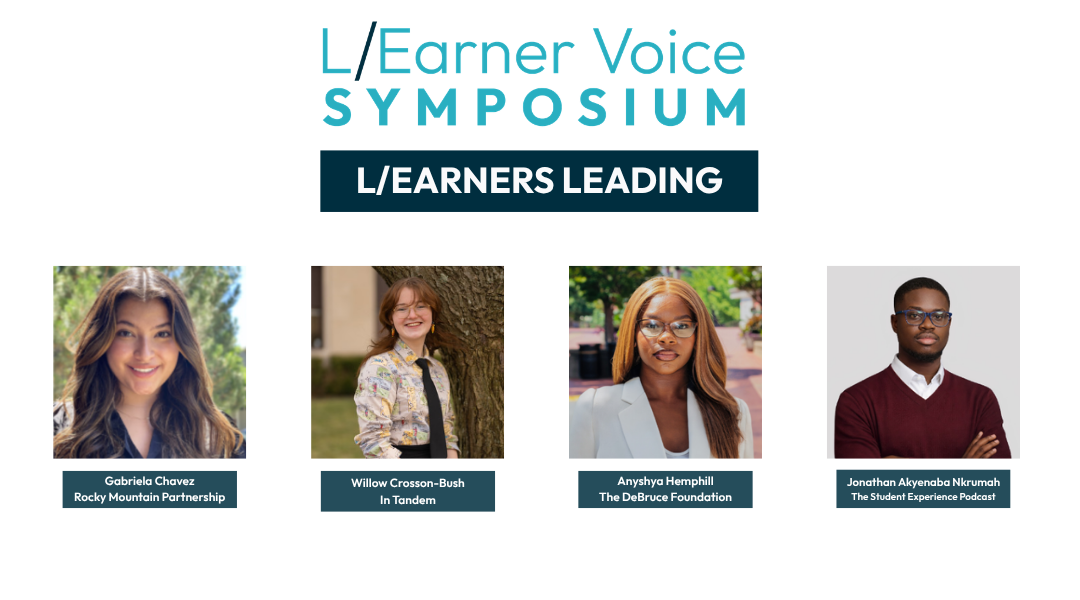
Our recent L/Earner Voice Symposium offered a powerful reminder that systems are stronger when they are shaped by the people they are meant to serve. The learners and earners who presented Ted Talk-style reflections have worked with education and workforce organizations that value the expertise and lived experiences of learners and earners. They shared honest reflections about the difference between simply inviting young people into conversations and creating environments where their insights and ideas genuinely shape decisions, opportunities, and outcomes. Throughout the discussion, several themes emerged consistently: the importance of authentic engagement, the need for empowering environments where young people feel safe sharing ideas, and the role relationships and mentorship play in building confidence and opportunity. Speakers emphasized that learners are not only participants in education-to-workforce systems — they are experts in the challenges those systems are trying to solve. Panelists also spoke candidly about the barriers many young people face, including financial limitations, self-doubt, and the need for spaces that support both personal growth and guidance. “Young people deserve to get paid for their work,” said Gabriela Chavez, urging organizations to avoid situations where only young people who can afford to participate are the ones who get heard. Our learner and earner speakers also shared inspiring stories about moments when their voices influenced real change — from improving programs and products to advocating for education funding and mentoring others. Anyshya Hemphill had a moment when she learned that her insights and leadership led to 400 young people engaging with the networking guidance provided by the DeBruce Foundation. “That was the moment I was like, okay — wait, what I said actually made a difference.” Thank you to all of our learners and earners who shared their experience.
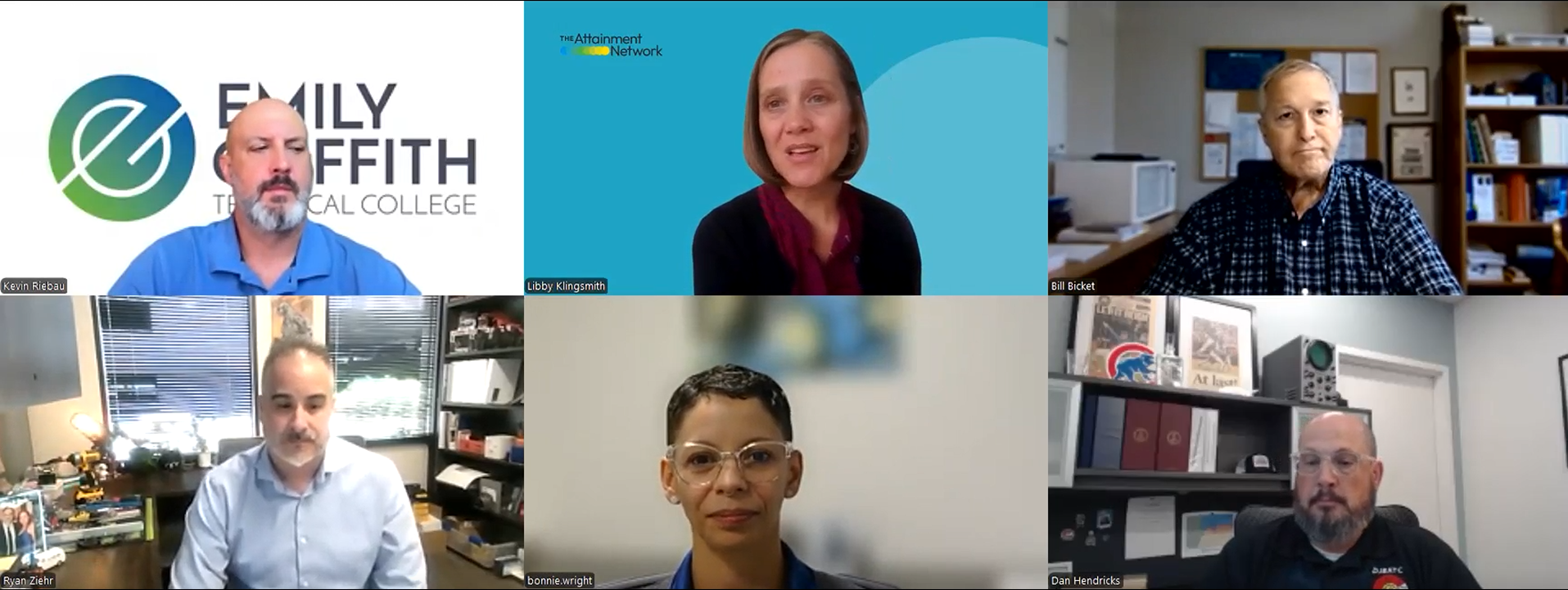
Lasting systems change doesn’t happen by chance. It happens when schools, colleges, employers, and communities work together toward shared goals — and someone helps connect the pieces into a coherent system that drives results. That’s the role of intermediaries. In this short video, learn how intermediaries like The Attainment Network help bridge silos, build trust, align partners, and support implementation that leads to lasting impact. Hear how this approach is helping communities like the San Luis Valley strengthen education-to-workforce pathways and meet critical workforce needs. Watch the video to see why intermediaries are essential to turning collaboration into action.