Rethinking Career Advising in Colorado
Colorado’s Moment of Opportunity
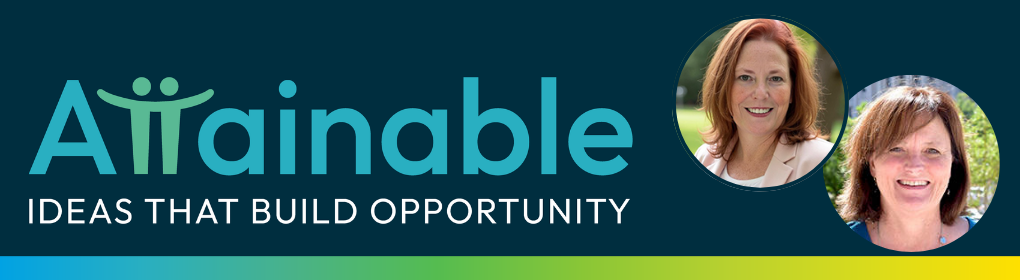
By Rana Tarkenton and Dr. Kim Poast
Colorado has made meaningful investments in career-connected learning over the last decade — from Career and Technical Education (CTE) and Concurrent Enrollment (CE), to Work-Based Learning (WBL) and Industry-Recognized Credentials (IRCs). Taken together, these investments signal a clear commitment to ensuring learners can connect education to opportunity.
And yet, for many learners, the system still feels hard to navigate.
Despite strong programs and passionate practitioners, our advising ecosystem remains fragmented. Learners often receive inconsistent guidance, unclear or competing messages, and uneven support depending on where they live or which system they happen to be in. Data reinforces what many of us hear anecdotally: too many people, especially young people, are unsure about their future, and too few feel equipped with the information and support they need to make confident decisions.
At the same time, Colorado is at an inflection point. With renewed attention on the state’s “Big 3” priorities and system transformation more broadly, we have a real opportunity to rethink career advising — not as a standalone service or a one-time interaction, but as the guiding thread that helps learners make sense of Colorado’s many investments in career-connected learning and workforce development, translating them into coherent, meaningful pathways.
In that spirit, we asked Rana and our long-time board member Dr. Kim Poast to reflect on what effective career advising looks like, where our current systems fall short, and how Colorado can move toward a more aligned, learner-centered advising ecosystem.
Q&A: Rethinking Career Advising
Q. When in your career have you seen a career advising system that truly worked for learners? What made it effective?
Kim: I go back to my experience at a community college, when we rolled out “red carpet days” for new students. There was an intentional collaboration among student advising, registrars, bursars, and academic departments to ensure that students were able to walk out of the day with a schedule in hand, understand their finances, and navigate their first days at the college. The emphasis of those days was to ensure that students were connected to someone who cared about them and that the system was easily understood. Because staff were in an “all hands on deck” mode, issues that arose could be immediately navigated — whether that was a question about how to pay for books or what major related to a job in the future. Of course, there are not always opportunities to ensure this kind of collaboration happens all at the same time. But the ability to connect with students exactly where they were was key to ensuring a successful journey.
A few years ago, I was reintroduced to a student I had met 20 years earlier. He told me that he had been in my office once and said, “I don’t remember what we talked about, but I do remember how that meeting made me feel — you made me feel like I was important, and that mattered.” I think about that a lot and truly believe that this is one thing we are missing: that personal connection with other humans and making them feel that their experiences are relevant and important.
Rana: One of the strongest examples I’ve seen of a career advising system that truly worked for learners was when I was working in Boston at the Higher Education Information Center. The center functioned as a community-based resource, serving learners from high school through adulthood, and it was intentionally designed to meet people where they were in their educational and career journeys.
Advisors were trained to thoughtfully intake learners, assess their needs, interests, skills, and aptitudes, and then tailor advising based on each individual’s context. A high schooler exploring future possibilities received a very different kind of guidance than an adult learner looking to upskill or return to education — and that differentiation was a strength, not a limitation.
Equity was central to the model. Located in the basement of the Boston Public Library, the center was accessible by public transportation and embedded in a public space that truly belonged to the community. It wasn’t reserved for students on a traditional college-going path. Instead, it made high-quality postsecondary advising available to anyone — high school students planning their next step, adults navigating career transitions, or learners at any point in between. Over time, it became a trusted place the community knew it could return to again and again.
What also set the center apart was the depth of expertise among its advisors and volunteers. In a city with a dense and complex higher education landscape, advisors had specialized knowledge across the full spectrum of options — from certificates and associate degrees to four-year programs and beyond. There were staff trained in financial aid, career exploration, and postsecondary options, allowing the center to support learners with a wide range of goals and needs.
Most importantly, the model seamlessly bridged K-12 education, higher education, and workforce systems. Advising wasn’t siloed or transactional; it was relationship-based, informed by strong training and real-time knowledge, and designed to support lifelong learning. That kind of unified approach is what I believe is still missing in Colorado today — a system at scale that creates access to shared tools, trusted guidance, and individualized support for any learner, at any stage of their journey.
Q. Based on what we know from Colorado’s landscape analysis, what are our biggest challenges with our current approach to career advising?
Rana: One of Colorado’s biggest constraints right now isn’t our policy environment — in fact, in many ways, it’s one of our strengths. The state’s newly elevated “Big 3” priorities — postsecondary credit, work-based learning, and industry-recognized credentials — give education providers and system leaders clear signals about what matters and where learners should focus to build skills, experiences, and credentials that lead to family-sustaining, thriving careers.
Where we continue to struggle is with seamless navigation.
Learners are often left to figure out on their own how to access careers and career-connected learning opportunities like postsecondary credit, work-based learning, or industry-recognized credentials, especially individuals who are not in a formal learning environment; how to determine which opportunities are high quality; how to document and communicate what they’ve learned to employers or education providers; and how to ensure that these experiences actually stack and align with their long-term aspirations.
Kim: Everything Rana said — and our advising system remains fragmented. The quality of advising varies widely, particularly in rural and under-resourced communities. Advisors often carry caseloads that are simply too large to manage effectively and may lack consistent training, access to real-time information, or the tools and time needed to provide ongoing, relationship-based support. In postsecondary settings, advising functions are also often disconnected from academic centers that have the most up-to-date information on major requirements, which can further complicate guidance for students.
We also lack shared accountability, coordinated messaging across systems, and portable learner data that follows students as they move between K–12, postsecondary education, and the workforce. The result is that learners receive mixed messages and uneven support — even as they are being asked to navigate increasingly complex pathways. Addressing these challenges isn’t about creating more programs; it’s about ensuring learners experience a streamlined, coherent system that truly supports their goals.
Q. With the “Big 3” priorities now front and center, how should our advising systems evolve to support learner navigation across these opportunities?
Rana: For the Big 3 to truly set a strong foundation for learners, advising systems must evolve to actively support more fluid navigation. Learners need help prioritizing opportunities, understanding how they connect to different goals, and deciding which pathways make the most sense at different points in their journeys.
One of the most important levers we have is the Individual Career and Academic Plan (ICAP). While there has been a lot of effort to ensure ICAP plays a meaningful role in high school, its potential is far greater. It could be used more intentionally beyond 12th grade and made portable to postsecondary enrollment and workforce settings. Career planning shouldn’t end at graduation. ICAP should be a living tool that learners continue to build on as they move into postsecondary education, training, and the workforce.
Kim: Stronger communication and coordination across schools, colleges, and employers is also essential. Learners shouldn’t have to re-explain or re-document their experiences each time they move between systems, and advisors shouldn’t be working with partial or outdated information. We need systems where information is accessible and usable in real time — both for learners and for those advising them.
That also means investing in the people doing the work. Advisors need access to real-time labor market data, ongoing professional learning, and shared tools that help them connect education and training to real career opportunities. Career advising should be professionalized and treated as a foundational skill across K-12, higher education, and workforce settings — not confined to a single role or institution.
Tune into future editions of The Attainable as Rana and Kim share The Attainment Network’s 2026 efforts to advance the best practices in career advising and nurture systems that truly serve learners, employers, and communities across Colorado.
RECENT ARTICLES