Building Strong Pathways Starts with Career Advising
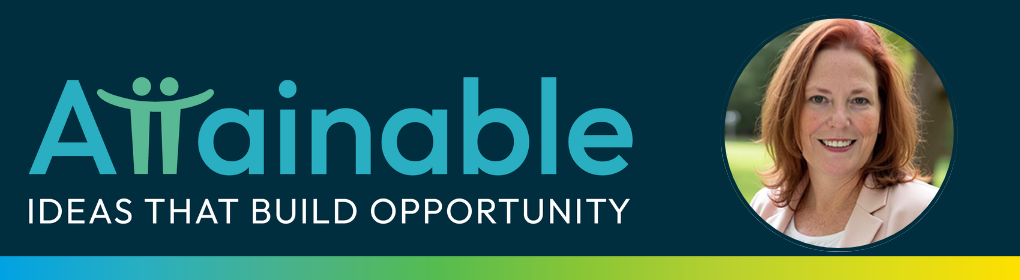
I recently had the opportunity to meet Aimar Amezcua-Sandoval, a workforce development specialist at Denver Health, during a panel discussion at Metropolitan State University Denver titled Healthcare Careers You Didn’t Know Existed.
During our conversation before the event, I learned something unexpected: Years earlier when I worked at the Denver Scholarship Foundation, I had hired the college and career advisor who helped launch Aimar’s journey.
It was a powerful reminder that the systems we talk about improving are ultimately built and shaped by people. The ripple effects of a highly qualified, well-prepared advisor can extend far beyond a single decision or moment in time.
We often talk about education and career pathways as if they are obvious routes that learners intuitively step onto and follow. In reality, many learners experience something very different. They face big decisions without clear information about their options or what steps to take next.
That’s where career advising makes such a difference. Advisors help people distill their interests, understand what’s possible, and navigate decisions with more confidence.
I wanted to hear more about Aimar’s career journey, so I reached out to learn more about her path from from high school student to nurse to workforce development specialist at Denver Health.
The following edited excerpt from our conversation illustrates how powerful high quality career guidance can be.

Aimar Amezcua-Sandoval, MHA
Workforce Development Specialist
Denver Health
Rana: Career interests often emerge from lived experiences rather than formal planning processes — a reminder that advising must help individuals connect personal meaning to professional pathways. What first led you toward healthcare?
Aimar: My senior year of high school, my sister fractured vertebrae in her spine in a drunk driver collision. Seeing how she was cared for at Denver Health really inspired me.
She wasn’t treated as just another number, but as a patient, as a daughter, as a sister. They cared about everyone in that room.
I was a senior who thought she wanted to be a pathologist. After that hospital journey, I decided I wanted to be a nurse — the person who knows patients’ first names and their families and what they need.
That’s what really sparked it.
Rana: You’ve said a college and career advisor played a pivotal role in your journey. What difference did that support make?
Aimar: Being a Latina who comes from immigrant parents, having to navigate not only my own education but their life here in the United States was very difficult. If you asked my high school self what social capital was, I wouldn’t have known how to answer that.
At my high school, we had a Future Center through the Denver Scholarship Foundation, and I had an incredible advisor, Miss Sierra. She was a staple in my career journey.
She helped me with everything — FAFSA, applications, personal statements, understanding costs, housing, transportation — all these things I never thought of. But she also asked questions that helped guide me, like whether I really understood what nursing required and whether it aligned with me.
When I told her I wanted to be a nurse, she asked, “Are you sure? Do you know what it takes?” She connected me to CNA programs so I could experience the work before investing all this time and money.
Without her, I would have been lost. I probably would have managed it myself, but it would have been much more difficult trying to navigate everything with parents who didn’t go through that process.
Having a guide and mentor during that time was a staple in my journey. Advisors help you get there with fewer hiccups. We don’t know what we don’t know unless someone is there to help and advise us and help us maneuver systems we would have never known how to navigate ourselves.
Rana: How did advising help you take your first step into a healthcare pathway?
Aimar: She connected me to CNA programs to make sure this was what I wanted. They helped me enroll and do financial aid. She told me, if you don’t love it, that’s okay — your first two years still count.
Luckily, I ended up loving it and stuck with it.
Advising helps you explore before committing. It helps you understand what the work actually looks like and make decisions with more confidence.
Rana: Advising often focuses on entry points, but navigation support remains critical after hiring — particularly during early career transitions. As you entered the workforce, where did you see gaps in support?
Aimar: Being a young professional, especially a Latina in organizations with majority white employees, I felt like I always had to prove myself and work harder so others could take me seriously.
As a CNA, we were often short staffed. Instead of nine patients, I’d have 18 or even 27. I saw very quickly how that affected not only me and my learning, but patient care.
That’s where burnout began.
Later, during my internship at Denver Health, I learned about mentoring and resources to prevent burnout early.
One statistic we found was that turnover is highest in the first three years. If employees reach that third year marker, there’s a much better chance they stay for their career.
Those early supports are critical.
Rana: From your perspective now, how clear are healthcare career pathways — and what role does advising play?
Aimar: Very unclear, if I’m being honest. It’s like walking through a rainstorm and your glasses keep getting wet after you wipe them.
People get stuck at many different points. Some don’t know what possibilities exist. Others don’t know how to get training or apply for the next move.
At every step, someone is going to be stuck unless they have some type of advisor guiding them on how to strategically make the next move.
That’s my job now — helping employees explore options, figure out schooling, connect to programs, and fill in those gaps.
I met a housekeeper who loved watching the care team on her unit interact with patients and said, “I want to be a part of that team.” I helped her enroll in a CNA program. She graduated, applied to the same unit, and was hired almost immediately.
Now she works less, makes more money, has more time with her kids, and feels fulfilled being part of that team.
That’s what advising can do — help people see opportunities and understand how to get there.
Rana: One of the challenges in designing pathways is that systems often assume linear progress, while real lives rarely follow straight lines. What do people often misunderstand about how careers actually unfold?
Aimar: I would love others to know that our path isn’t always linear. It’s going to be some steps going up, maybe a couple steps going back. And it’s going to be very unique and look different from the next person.
After graduating from high school, I told myself, I’m going to be a nurse. I gave myself a timeline — prereqs two years, nursing school, get a job. But a lot of things happened in between that shifted my perspective and led me to where I am today.
It’s okay to change your mind and want to start over and pursue a new dream. Ever since I steered away from my “year-by-year plan” to more of a “let’s enjoy everything that comes up,” I’ve let that guide me to where I need to be.
I have no regrets. None, absolutely none.
My reflections after getting to know Aimar
Aimar’s story reinforces something we see across education and workforce systems: pathways, even well-constructed ones, only work when people can navigate them.
Career advising is not a single moment tied to high school graduation, a college application, or a first job. It is an ongoing process of helping individuals understand possibilities, test interests, interpret choices, and move forward with confidence at key transition points.
Today, Aimar provides the same kind of navigation support she once received and she still has an informal advisor of her own helping her navigate her professional journey at Denver Health — illustrating how advising functions as a continuous thread across a career lifecycle.
From high school exploration to early career decisions to advancement within the workplace, advising provides the social capital and clarity many learners and earners would otherwise have to build alone.
If we want stronger pathways — and stronger workforce outcomes — we must treat career advising and navigation as essential infrastructure rather than optional support.
Because systems are ultimately shaped by people — and when we invest in the advisors who guide others, the ripple effects extend far beyond a single decision, accelerating journeys toward opportunity in ways no pathway map alone ever could.
RECENT ARTICLES