We’re Better Together
A Conversation with Yvonne Myers, Chief Operating Officer of the Fort Collins Area Chamber of Commerce
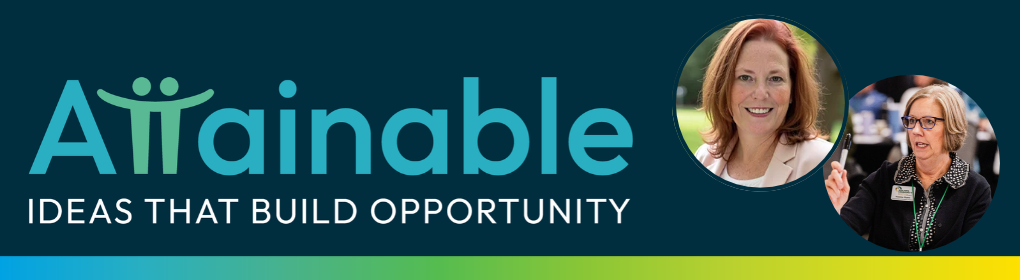
Our CEO Rana Tarkenton recently sat down with Yvonne Myers, COO of the Fort Collins Area Chamber of Commerce, to explore what it takes to build effective regional talent pipelines. Drawing on her experience on both the employer and workforce side of partnerships, Yvonne shares what she’s learned about bringing employers and education partners together and turning shared needs into action. Their conversation also explores how changing perceptions of careers in the trades can open new possibilities for learners and families.
Here’s a lightly edited summary of their conversation.
Rana:
Yvonne, you spent more than 30 years in healthcare before moving into talent and economic development at the Chamber. How has sitting on both sides of the table shaped the way you think about building regional talent pipelines?
Yvonne: That’s a really good question, Rana. Serving on both sides has helped me understand both perspectives.
From the industry side, you can feel isolated and alone, and you don’t always realize the resources available to you. You’re moving at a faster pace, making decisions more quickly, and you’re sometimes willing to take a little more risk.
On the other side – government, workforce, and education – our partners have requirements, processes, and procedures they have to follow.
It’s vitally important that both sides spend time with each other to understand that.
Before I came to the Chamber, someone said, “Yvonne, we want you at the meeting because you understand how to work with workforce and education, and you come from industry. You can translate between the two.”
I thought, “It’s not a foreign language.” Sometimes we just need to be in the same room and understand each other’s limitations.
Our workforce won’t get what it needs if we don’t work together. Both sides of the partnership are equally important.
Rana: Sometimes we get people into the room representing organizations, but are they the right people to make the changes we need?
Yvonne: We’ve been able to move a lot of things forward and partner well with Poudre School District because the superintendent shows up. He’s right there, driving the work and supporting his people. Sometimes, when you reach out, he’ll say, “Yes, but I’m also going to bring these two or three people. These are the people doing this work.”
That model is the best. You want the superintendent informed and backing what you’re doing. You also want the people on the ground who can say, “That’s not going to work,” or, “It could work if we did this.”
It’s the same with industry. Sometimes our sector partnerships say, “We don’t have the C-suite people. We need them.” You need both. You need the C-suite to know what’s going on, say yes, and bring the right people into the work.
Rana:
We often talk about making education and workforce systems more responsive to employers. Talent Pipeline Management, which you’ve dug into deeply, takes that further by organizing around collective employer demand. What’s different about that approach? Why does it matter for building strong regional talent pipelines? How is that taking shape where you are?
Yvonne: When the Talent Pipeline Management model came out from the U.S. Chamber of Commerce Foundation and made its way across America to us, it took me about 10 minutes to say, “When you launch a sector partnership and they identify workforce, you use the talent pipeline model.”
What I love about it is that the first meetings are industry-only. Employers have to agree on what they need before bringing education partners into the conversation.
When we started meeting with our HVAC employers, their entry-level position had probably 20 different titles. No wonder a guidance counselor, parent, student, or adult looking for a job couldn’t find it. We worked to agree on a common title and the skills someone needs. Individual businesses might need additional skills, but there’s enough in common for education partners to say, “We can teach those things.”
Then we ask, “What’s your greatest need, and how many people do you need to hire in the next two years?” Our HVAC employers identified 250 entry-level positions. When you call a superintendent with that number, they say, “When can we meet?” That’s a different conversation than one business saying it needs three people.
Poudre School District took those hiring requirements and created an HVAC program that will start in January.
Then we collect data: How many students did we add? How many are still working in the industry a year later? Why did they stay or leave? It’s continuous quality improvement, which industry understands. Pretty soon, you’ve built a partnership where everyone understands what’s needed and what they can do together.
Rana: With AI and other shifts in the workforce, we're seeing some employers place greater emphasis on upskilling and reskilling existing employees rather than hiring for entry-level positions. Are you seeing that shift in Northern Colorado, and how are employers responding?
Yvonne: That’s a great question, and we’re starting to hear more of it.
Our hospitality sector partnership applied for a Colorado Workforce Development Council grant to upskill people in technology and AI use in restaurants and retail.
It’s led by employers who said, “I can’t believe how much more time I have now that I’m using AI for scheduling and bookkeeping. I have more time to spend helping an employee learn to cook or better serve the business.” They want to share that with others who aren’t up to speed on AI.
In construction, we hear a lot about the difficulty of finding middle managers. We’re working on entry-level pipelines, but you need enough people coming in and moving up to fill those middle-level roles.
At nursing homes, our greatest need was directors of nursing. It’s a highly skilled, tough job. You need enough nurses moving through the pipeline to have a pool of people who want to take it on. It’s the same with developing master mechanics in automotive.
Automotive technicians are making videos to show customers what’s wrong with their cars, and they have to write the explanation of the repairs. They need those communication skills, too.
Upskilling and reskilling also means understanding how and when to use AI. At a Department of Labor meeting, someone said, “You have to be sure what’s written in ChatGPT is correct, but you also need enough experience to know whether it’s correct.”
All these changes are affecting industry, and navigating them is tricky.
Rana: What promise do you see in the regional tactical plans that emerged from last year's talent summits? How might they help bring multiple industries together around a shared regional vision?
Yvonne: When the Colorado Chamber asked whether Northern Colorado wanted to host a regional talent summit, our CEO said, “Yes, and we want to be first.” The Loveland, Fort Collins, and Greeley Chambers came together to make that happen.
We focused on manufacturing, construction, and healthcare — industries with some of our greatest workforce needs and established sector partnerships.
Now that it’s time to execute the plans, we already have employers ready to go. They understand that we can do more if we do it together.
I’m excited that the workforce boards are overseeing these plans because it brings the work back locally and gets them more directly engaged. CWDC funding also gives us resources to act. There’s real organizing power when you have funding, a plan, and clear expectations.
Rana: Are there any specific strategies or initiatives you’re particularly excited about?
Yvonne: A few years ago, I asked one of the construction sector partnership leaders, who did a lot of tours with high school students if I could bring along other businesses. I ended up bringing bankers and all kinds of people to his event.
He has a plumbing company, and he started by asking, “What did you do this morning that involved water?”
“I made coffee.” “I took a shower.” “I brushed my teeth.”
Pretty soon, we were all saying, “We used a lot of water before we even got to this meeting.”
Then he asked, “What’s your impression of plumbers?”
Everyone chuckled because we all knew the answer. Somebody said, “The pants and the butt crack.”
He said, “That’s the impression, but that’s not who we are.”
One of the real focuses for construction is changing the perception of construction. It’s such a professional place.
Having worked in long-term care for so long, I know that industry well. Being at the Chamber, I’ve gotten to meet other industries and know them more deeply.
People in construction are so passionate about what they’ve built and the legacy they leave—driving by a building and knowing they built that school, knowing it’s going to be there for a long time.
That’s the passion they want to show to inspire people to go into the field — So parents can be inspired to say, “My child is doing something they love and making a difference in the world.”
Rana: I love that story and the thread you’re pulling on, Yvonne. It resonates with me on a personal level.
We had to have our faucets fixed and called a big plumbing company. This young man came in, probably 25 or 26.
He was the nicest kid. I started talking to him about his career journey because that’s what I always do. He was telling me his goal is to own his own plumbing company, but he’s thinking about how he can tie it to education.
He was saying all of this without me prompting him. He wants his business to have a philanthropic component because he wants to support things such as building schools.
I was really struck by that. It's fascinating that you brought up that example because both stories challenge the assumptions people make about careers in the trades. I'm thrilled with how mindsets are shifting, and I hope they'll shift even more quickly.
Thank you for spending this time with me, Yvonne. I think that's a wonderful place to end because, ultimately, that's what this work is all about.
RECENT ARTICLES

November Brings Opportunities to Celebrate Progress, Strengthen Partnerships, and Expand Opportunity